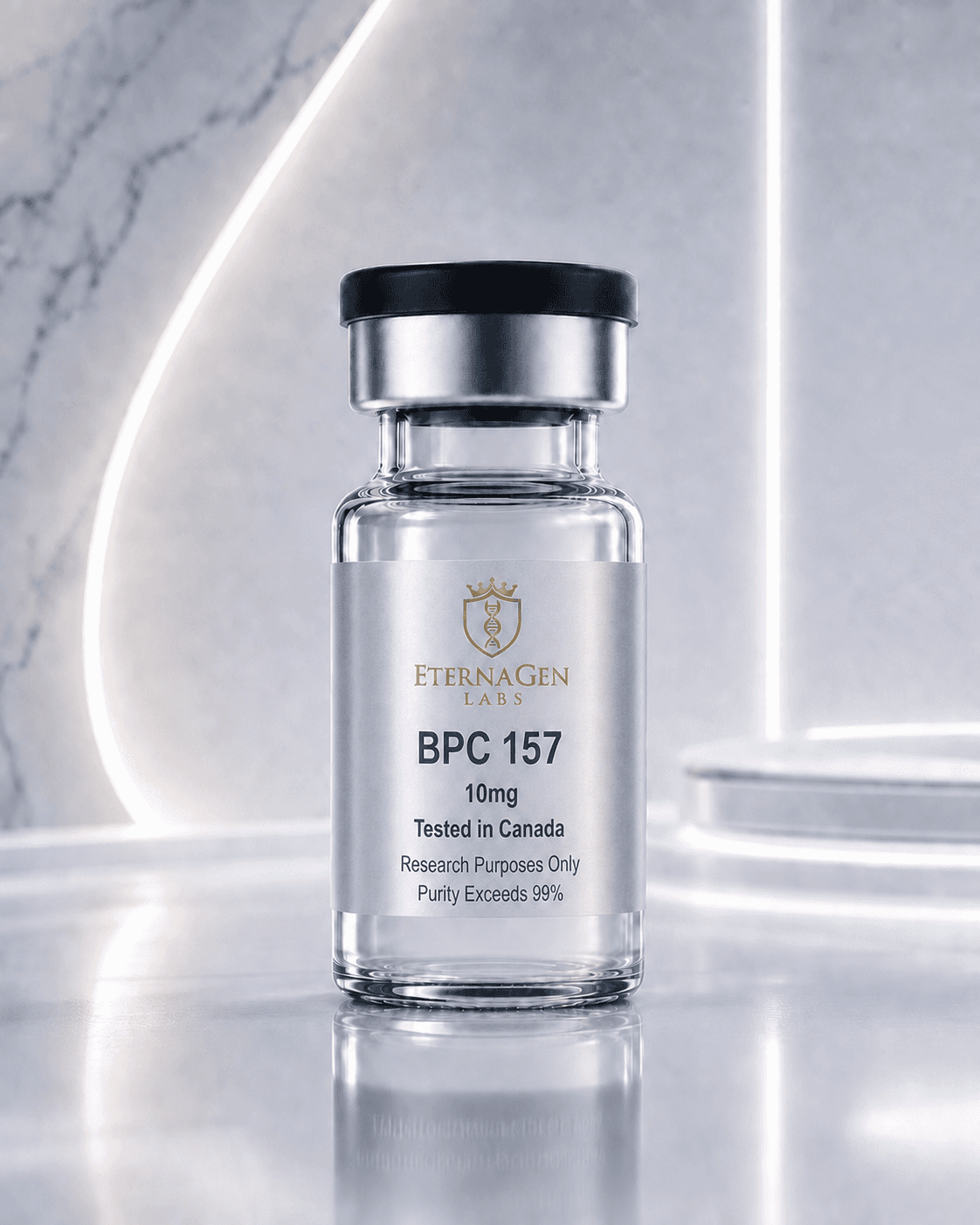
Peptide · Vial
BPC 157
$8910mg
An experimental peptide best known for early research into tissue repair, tendon injury and wound response.

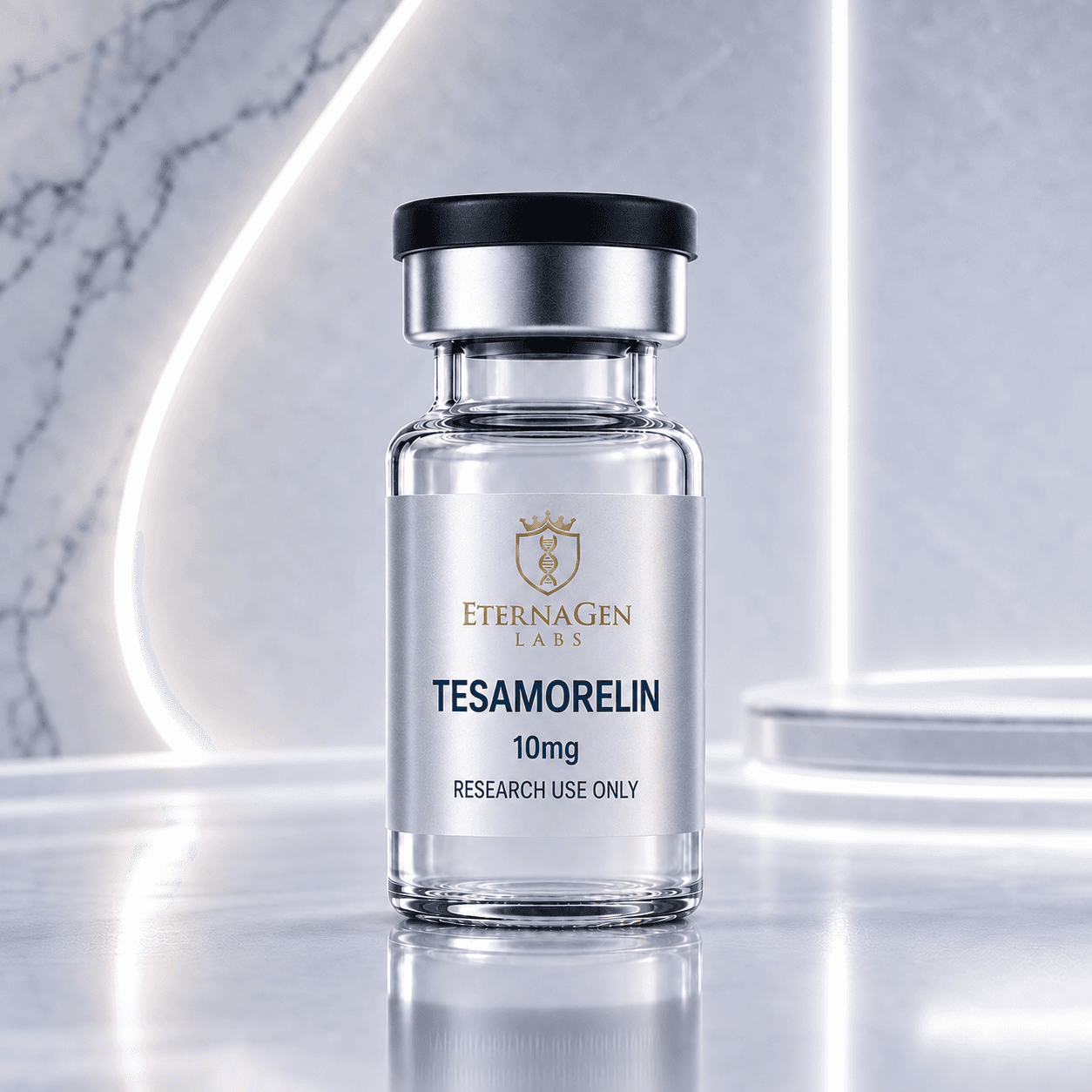 EternaGen / Research use only
Peptide · Research use only
A synthetic peptide that mimics a natural signal involved in the release of growth hormone.
Available to approved purchasers
Can’t find the right record?Send support the product name or batch code.
Contact supportProduct information
A synthetic peptide that mimics a natural signal involved in the release of growth hormone.
Tesamorelin has meaningful human research, but it is tied to specific prescription formulations and adults with HIV-associated lipodystrophy. A research material is not interchangeable with an approved medicine.
Tesamorelin is a stabilized analogue of growth-hormone-releasing hormone. Authorized tesamorelin drug products have formulation-specific labelling for a defined population; a research material is not interchangeable with an approved medicine.Specifications
Supplier-origin documentation will be published only after EternaGen verifies the source and record details.
Tesamorelin has authorized prescription-drug formulations for a specific indication. This catalogue item is a separate research material and is not represented as an approved, substitutable or patient-ready medicine.
Explore the research
Check what was studied, what researchers observed, and the limitation attached to each finding.
Randomized trials studied adults living with HIV who had excess abdominal fat while receiving antiretroviral therapy.
Evidence so far: Phase 3 human evidenceAdditional trials in people living with HIV examined visceral adipose tissue and hepatic fat under defined protocols.
Evidence so far: Clinical research in a narrow populationApproved U.S. labelling states that tesamorelin is not indicated for weight-loss management and that formulations are not substitutable.
Evidence so far: Regulatory label boundaryProposed mechanism
Tesamorelin stimulates pituitary growth-hormone release and increases downstream IGF-I. Clinical programmes measured visceral adipose tissue and metabolic or safety outcomes in carefully defined populations.
Evidence gaps
Primary sources
Related products
Peptide · Vial
An experimental peptide best known for early research into tissue repair, tendon injury and wound response.
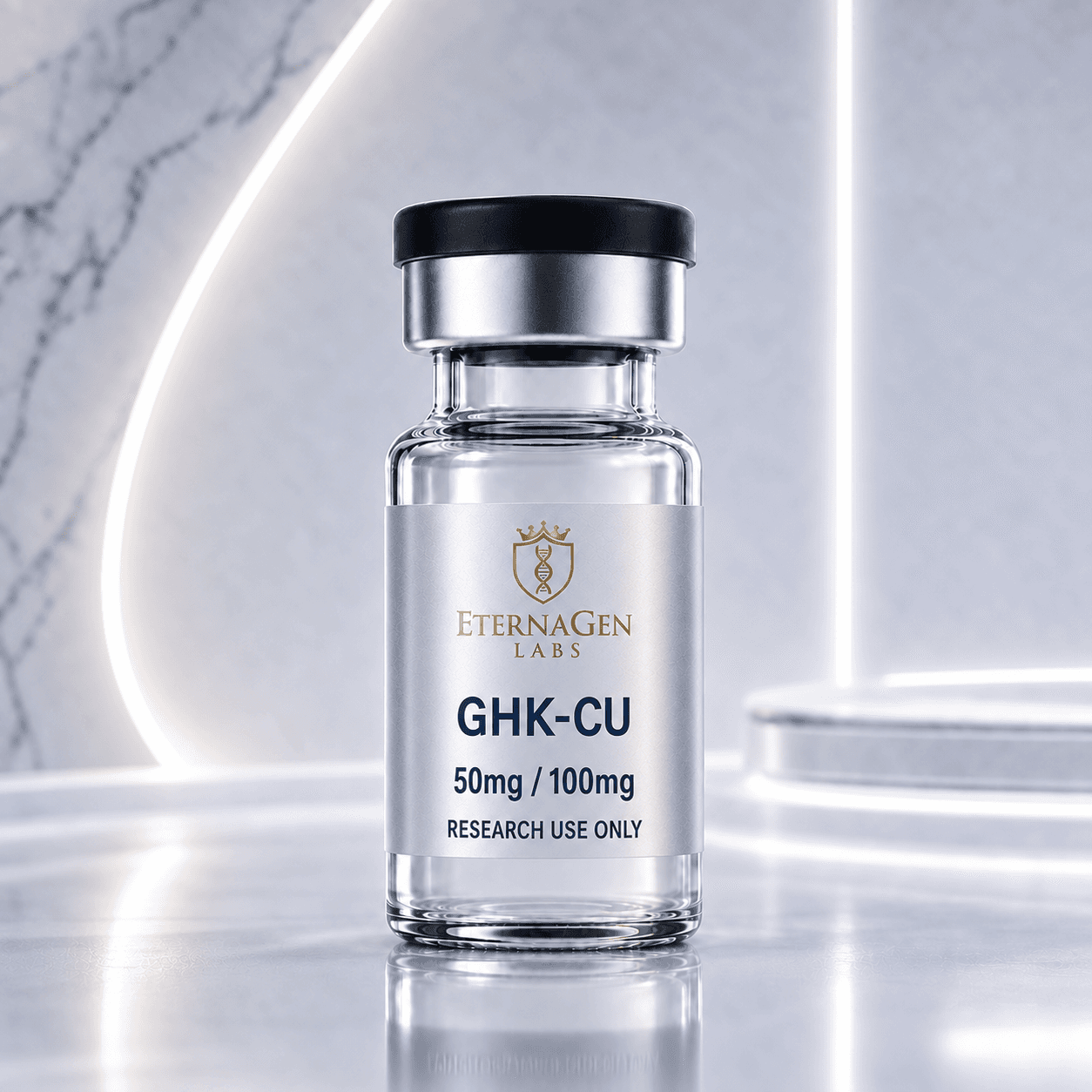
Peptide · Vial
A naturally occurring copper-binding peptide explored in skin, collagen and wound-healing research.
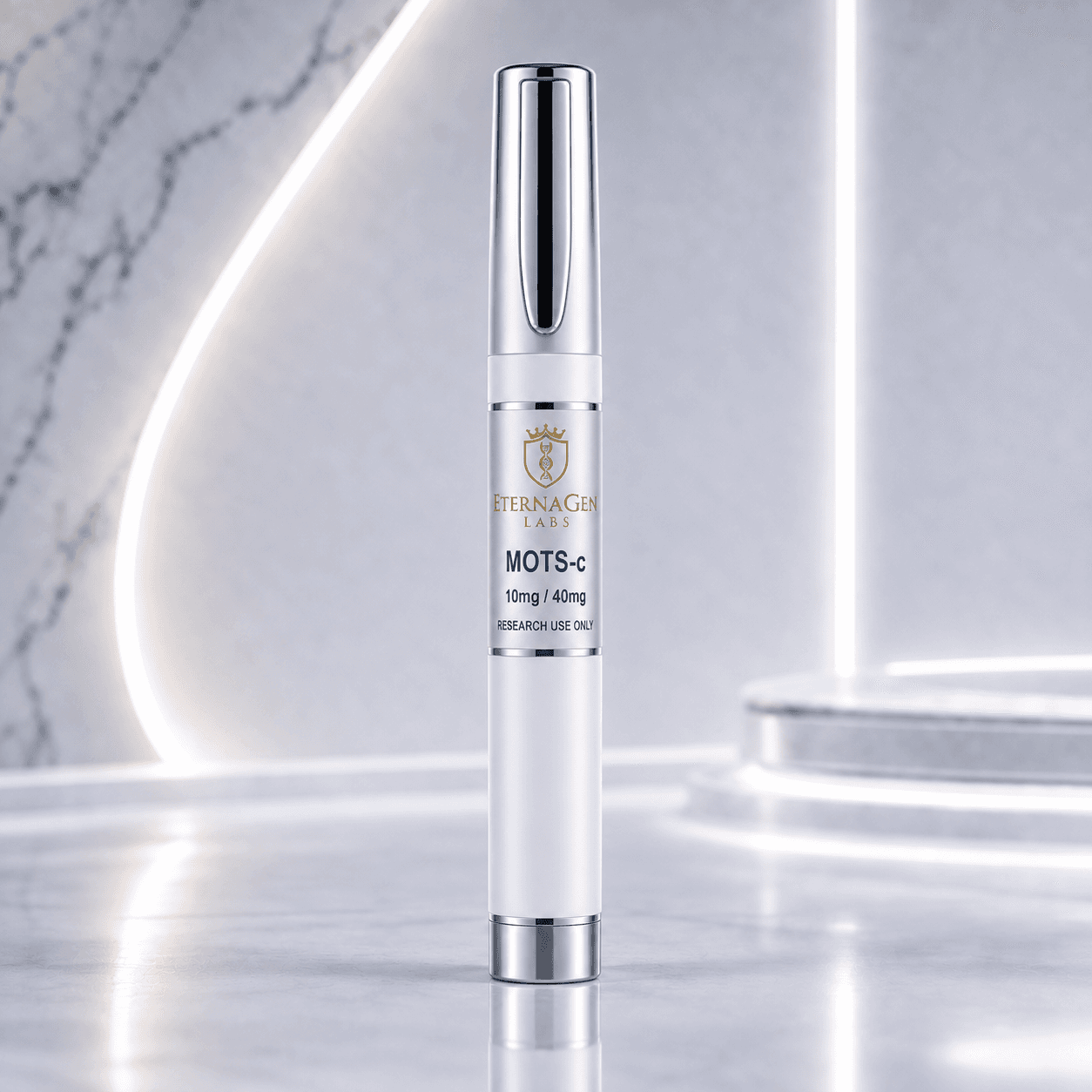
Peptide · Pen
A peptide made inside mitochondria and studied for its connection to energy, exercise and metabolic stress.