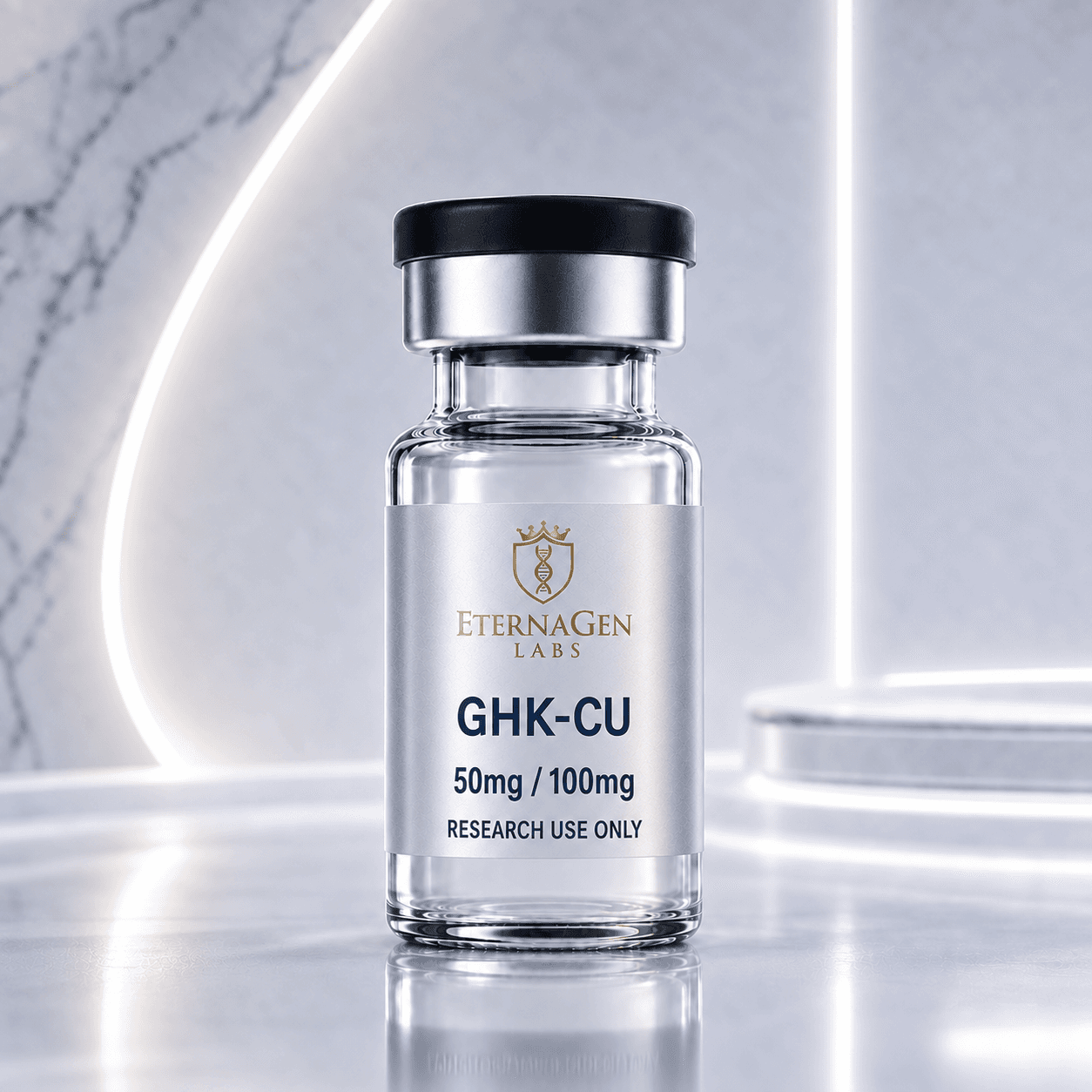
Peptide · Vial
GHK-CU
From CA$54.9950mg100mg
A naturally occurring copper-binding peptide explored in skin, collagen and wound-healing research.

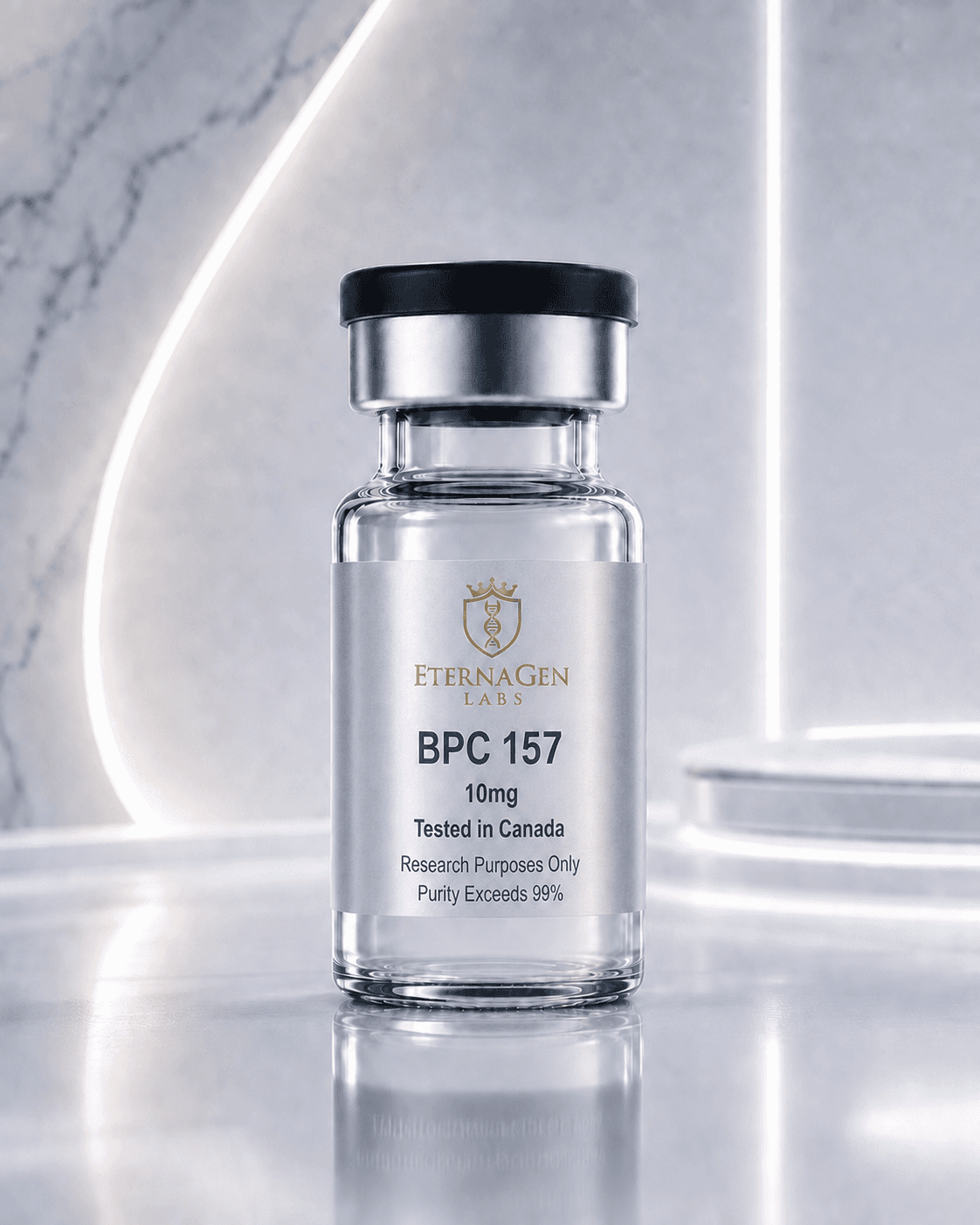 EternaGen / Research use only
Peptide · Research use only
An experimental peptide best known for early research into tissue repair, tendon injury and wound response.
Available to approved purchasers
Can’t find the right record?Send support the product name or batch code.
Contact supportProduct information
An experimental peptide best known for early research into tissue repair, tendon injury and wound response.
Researchers are interested in how BPC 157 behaves in models of tissue repair, tendon injury and wound response. Almost all of that work has been done in cells and animals, so we still do not know whether the same effects occur in people.
BPC 157 is a synthetic 15-amino-acid peptide. Most published research is made up of cell, tissue and animal experiments rather than adequately controlled human trials.Specifications
Supplier-origin documentation will be published only after EternaGen verifies the source and record details.
Health Canada lists the named compound or components among unauthorized injectable drugs identified in the Canadian market. A research-use label does not make an unauthorized product suitable or legal for personal use.
Explore the research
Check what was studied, what researchers observed, and the limitation attached to each finding.
Rat tendon-transection and cultured-tendocyte studies report changes in biomechanical recovery, cell migration and stress survival.
Evidence so far: Animal and laboratory modelsPreclinical papers explore angiogenesis, fibroblast activity and nitric-oxide-related signalling after experimentally induced injury.
Evidence so far: Hypothesis-generating evidenceRobust randomized human evidence for musculoskeletal recovery, gastrointestinal disease or systemic use has not been established.
Evidence so far: Major evidence gapProposed mechanism
Experimental work has examined cell migration, survival under oxidative stress and signalling involving focal adhesion kinase and paxillin. These are mechanistic observations, not proof of healing or recovery in people.
Evidence gaps
Primary sources
Related products
Peptide · Vial
A naturally occurring copper-binding peptide explored in skin, collagen and wound-healing research.
Peptide · Pen
A peptide made inside mitochondria and studied for its connection to energy, exercise and metabolic stress.
Peptide · Vial
A synthetic peptide that mimics a natural signal involved in the release of growth hormone.