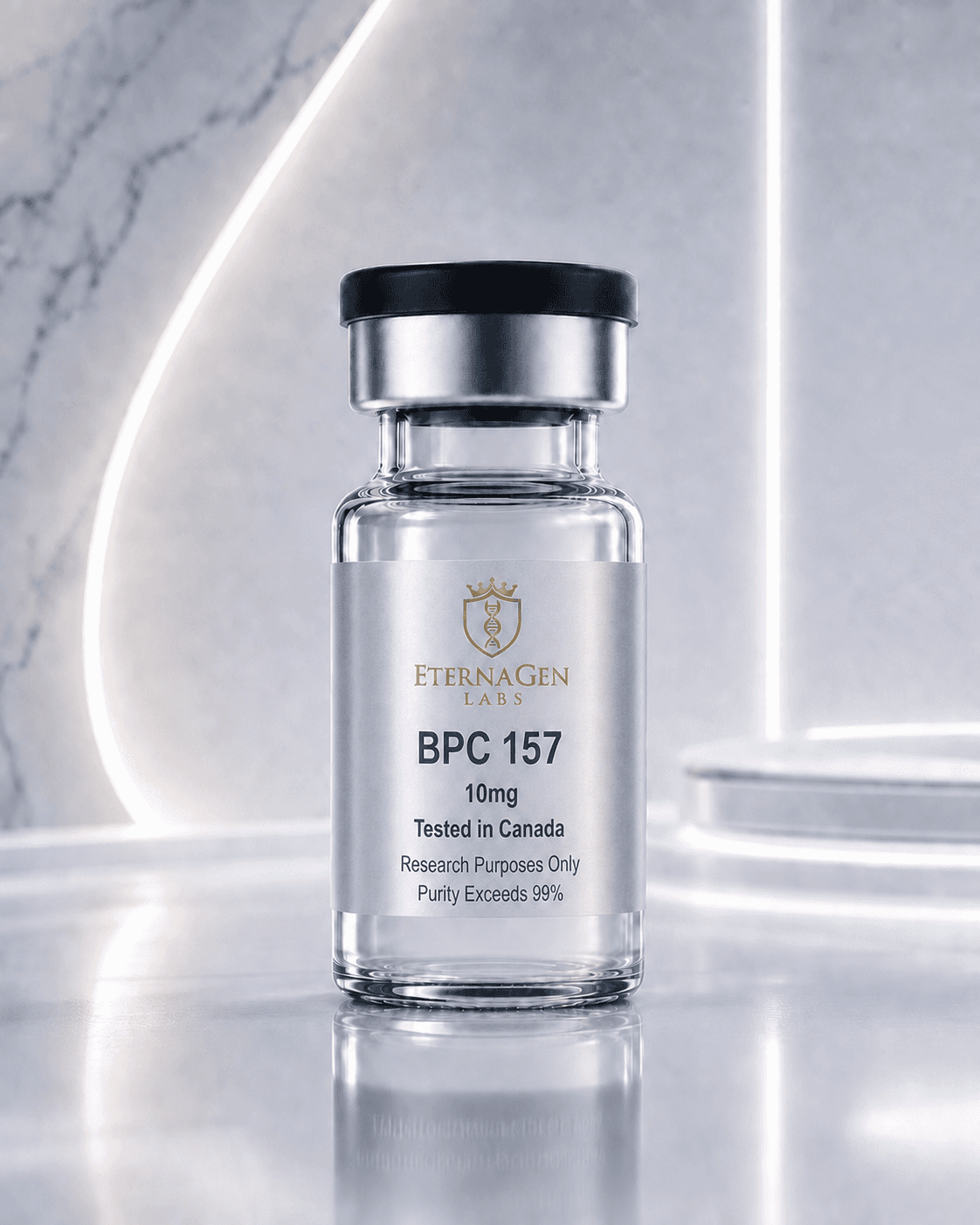
Peptide · Vial
BPC 157
$8910mg
An experimental peptide best known for early research into tissue repair, tendon injury and wound response.

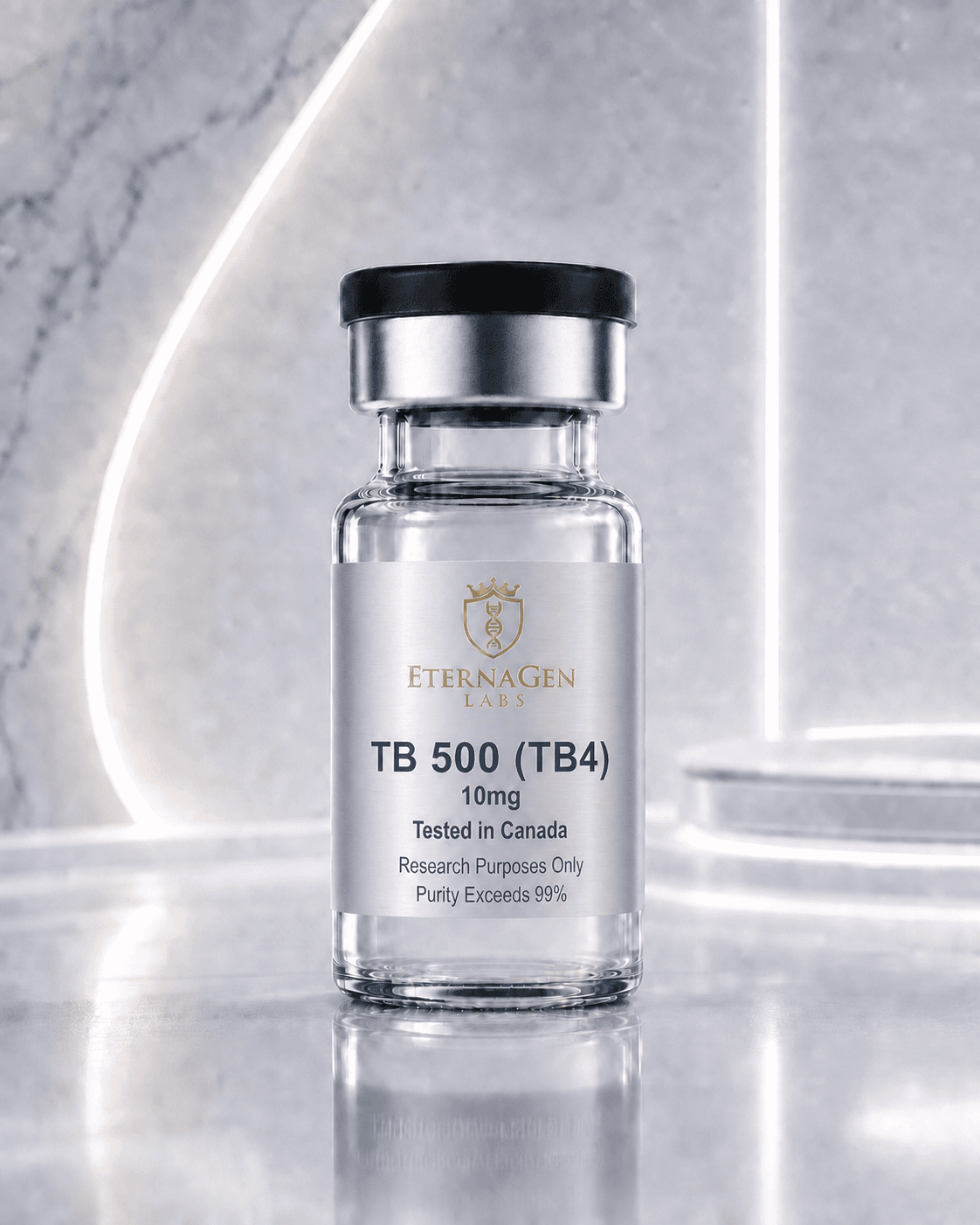 EternaGen / Research use only
Peptide · Research use only
A short peptide fragment related to thymosin beta 4 and explored in early tissue-repair research.
Available to approved purchasers
Can’t find the right record?Send support the product name or batch code.
Contact supportProduct information
A short peptide fragment related to thymosin beta 4 and explored in early tissue-repair research.
TB-500 usually refers to a small fragment of the much larger thymosin beta 4 peptide. Studies of the full peptide—especially topical eye studies—cannot be treated as proof for this fragment or another delivery method.
TB-500 commonly refers to the LKKTETQ fragment associated with thymosin beta 4. Full-length thymosin beta 4 is a 43-amino-acid peptide; the fragment and parent peptide must not be treated as the same molecular entity.Specifications
Supplier-origin documentation will be published only after EternaGen verifies the source and record details.
Health Canada lists the named compound or components among unauthorized injectable drugs identified in the Canadian market. A research-use label does not make an unauthorized product suitable or legal for personal use.
Explore the research
Check what was studied, what researchers observed, and the limitation attached to each finding.
Laboratory research on thymosin beta 4 examines actin sequestration, cell movement and tissue-response pathways.
Evidence so far: Mechanistic evidenceA phase 2 dry-eye study tested full-length thymosin beta 4 solution and did not meet its two primary endpoints.
Evidence so far: Formulation-specific human trialFDA reports no identified human exposure data for drug products containing the LKKTETQ fragment.
Evidence so far: Direct human evidence gapProposed mechanism
Thymosin beta 4 binds actin and has been studied in cell migration and repair-related pathways. Even where the parent peptide shows biological activity, molecular identity, formulation and route determine whether a study is relevant to TB-500.
Evidence gaps
Primary sources
Related products
Peptide · Vial
An experimental peptide best known for early research into tissue repair, tendon injury and wound response.
Peptide · Vial
A naturally occurring copper-binding peptide explored in skin, collagen and wound-healing research.
Peptide · Pen
A peptide made inside mitochondria and studied for its connection to energy, exercise and metabolic stress.