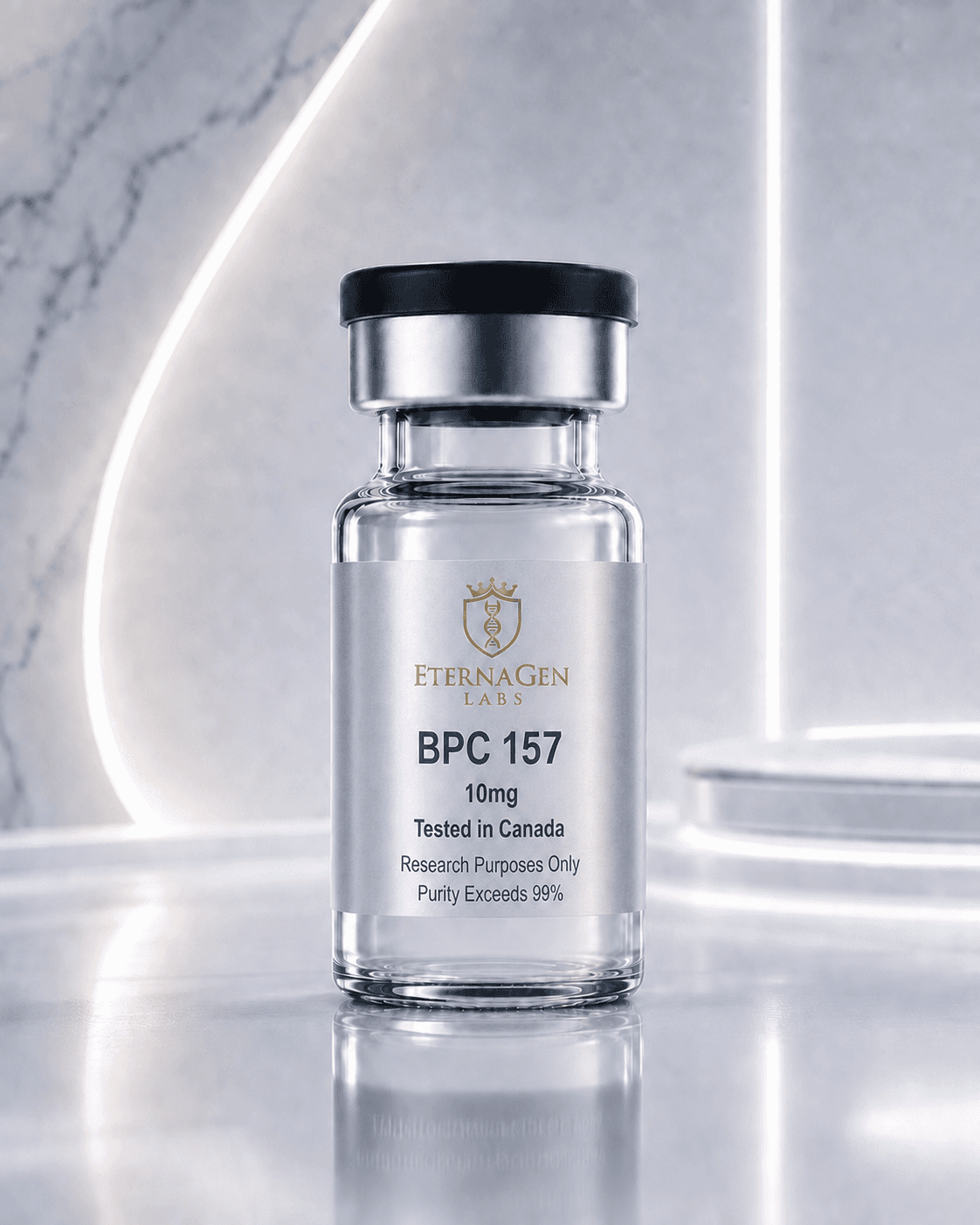
Peptide · Vial
BPC 157
$8910mg
An experimental peptide best known for early research into tissue repair, tendon injury and wound response.

 EternaGen / Research use only
Peptide · Research use only
An ACTH-fragment-derived heptapeptide explored in intranasal neurobiology and neurotrophic-signalling research.
Available to approved purchasers
Can’t find the right record?Send support the product name or batch code.
Contact supportProduct information
An ACTH-fragment-derived heptapeptide explored in intranasal neurobiology and neurotrophic-signalling research.
Semax has been examined in small human neuroimaging and clinical studies, while much of the mechanistic literature comes from animal models. Those findings do not establish the safety, efficacy or performance of a separately sourced research material.
Semax is a seven-amino-acid synthetic peptide with the sequence Met-Glu-His-Phe-Pro-Gly-Pro. It is derived from an adrenocorticotropic-hormone fragment and has been studied through intranasal administration in a small number of human and animal experiments.Specifications
Supplier-origin documentation will be published only after EternaGen verifies the source and record details.
This catalogue entry describes a research material, not an approved therapeutic formulation. Published findings do not provide directions for personal use and cannot verify the safety or performance of a separately sourced material.
Explore the research
Check what was studied, what researchers observed, and the limitation attached to each finding.
A small placebo comparison in healthy volunteers measured default-mode-network topology shortly after intranasal exposure.
Evidence so far: Small exploratory human studyRat studies have examined specific binding and short-term changes in brain-derived neurotrophic factor after intranasal administration.
Evidence so far: Preclinical mechanistic evidenceThe available literature does not establish long-term safety, broadly applicable benefit or equivalence between research materials and studied formulations.
Evidence so far: Major evidence gapProposed mechanism
Animal research has examined Semax binding and changes in brain-derived neurotrophic factor in specific brain regions. A small human fMRI experiment measured short-term changes in resting-state network topology. These observations are exploratory and do not establish a clinical outcome.
Evidence gaps
Primary sources
Related products
Peptide · Vial
An experimental peptide best known for early research into tissue repair, tendon injury and wound response.
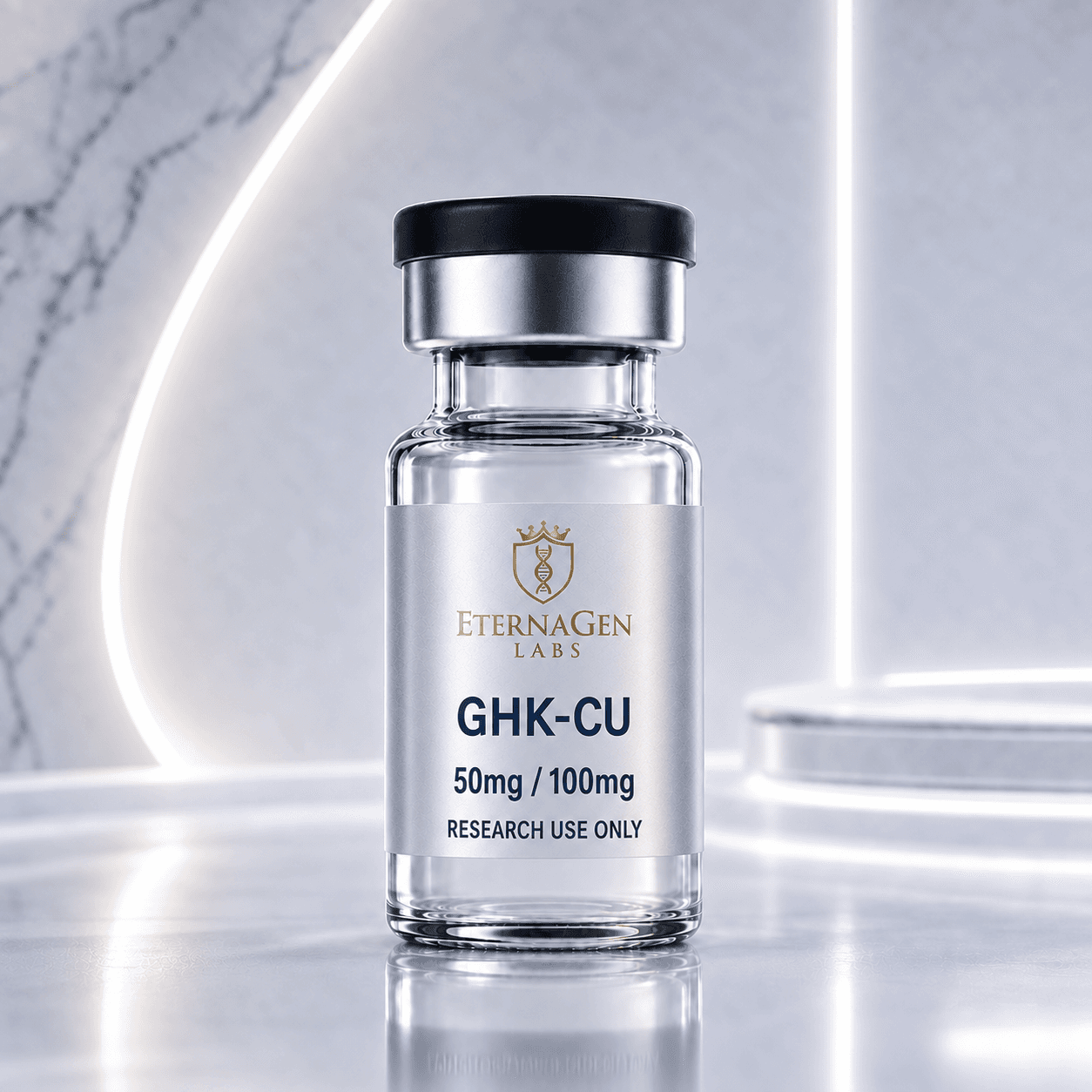
Peptide · Vial
A naturally occurring copper-binding peptide explored in skin, collagen and wound-healing research.

Peptide · Pen
A peptide made inside mitochondria and studied for its connection to energy, exercise and metabolic stress.