Peptide · Vial
BPC 157
$8910mg
An experimental peptide best known for early research into tissue repair, tendon injury and wound response.

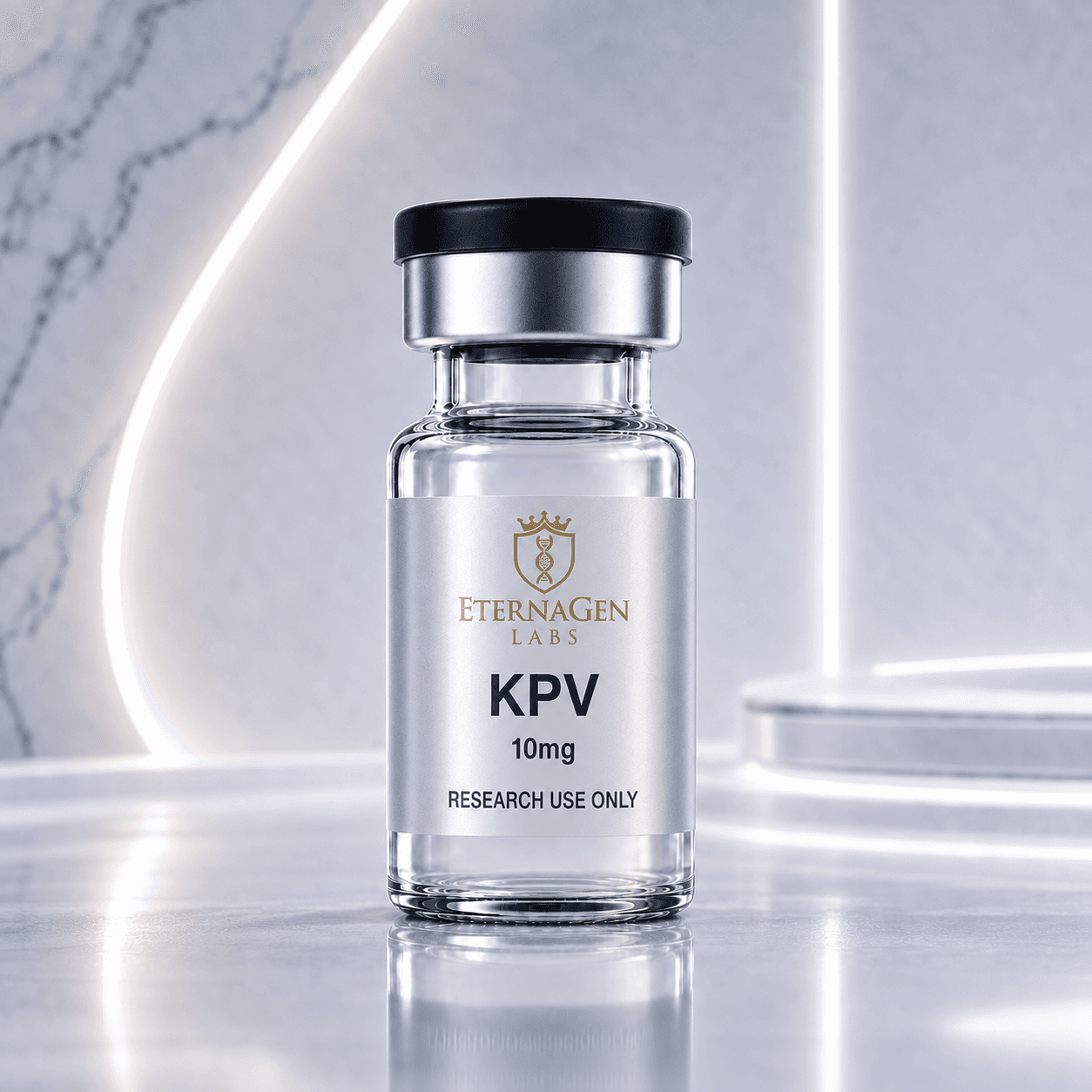 EternaGen / Research use only
Peptide · Research use only
A three-amino-acid peptide fragment explored in early inflammation, immune-signalling and gut models.
Sold out
Can’t find the right record?Send support the product name or batch code.
Contact supportProduct information
A three-amino-acid peptide fragment explored in early inflammation, immune-signalling and gut models.
Most KPV research comes from laboratory systems and mouse models of intestinal inflammation. Human benefit and safety have not been established, and regulators report little to no human exposure data for administered KPV products.
KPV (Lys-Pro-Val) is the C-terminal tripeptide of alpha-melanocyte-stimulating hormone. Published research focuses on inflammatory signalling in cells and experimental colitis in mice.Specifications
Supplier-origin documentation will be published only after EternaGen verifies the source and record details.
Health Canada lists the named compound or components among unauthorized injectable drugs identified in the Canadian market. A research-use label does not make an unauthorized product suitable or legal for personal use.
Explore the research
Check what was studied, what researchers observed, and the limitation attached to each finding.
Murine colitis studies report changes in histology, inflammatory markers and recovery under experimental conditions.
Evidence so far: Animal evidenceHuman-derived cell-line studies examine NF-κB signalling, chemokine secretion and cellular uptake.
Evidence so far: In-vitro mechanistic evidenceFDA reports no identified human exposure data for drug products containing KPV.
Evidence so far: Direct human evidence gapProposed mechanism
Cell studies report effects on NF-κB-related signalling and cytokine release. Intestinal models also examine uptake through the PepT1 transporter. These findings describe experimental pathways, not established clinical outcomes.
Evidence gaps
Primary sources
Related products
Peptide · Vial
An experimental peptide best known for early research into tissue repair, tendon injury and wound response.
Peptide · Vial
A naturally occurring copper-binding peptide explored in skin, collagen and wound-healing research.
Peptide · Pen
A peptide made inside mitochondria and studied for its connection to energy, exercise and metabolic stress.