Blend · Vial
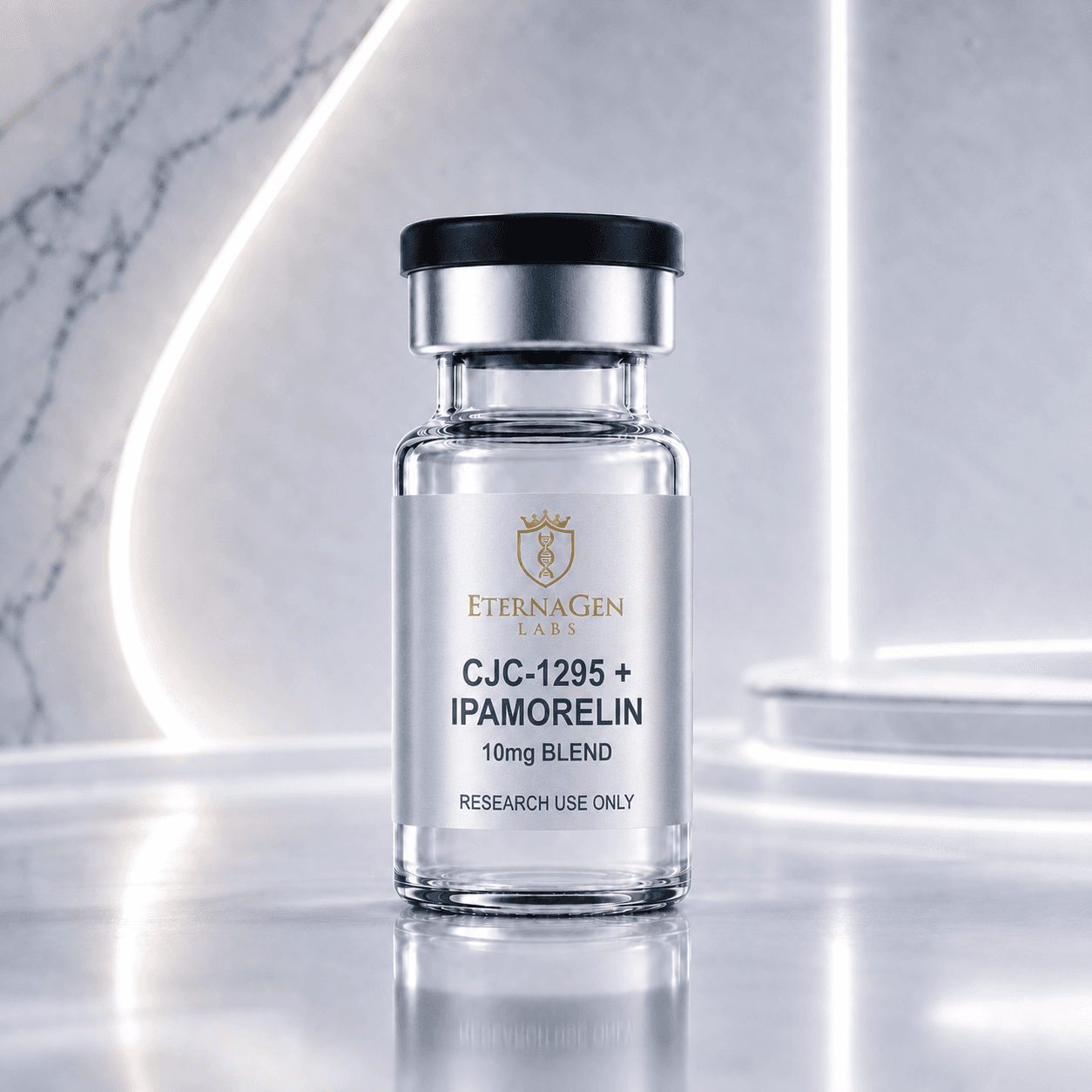
CJC-1295 + Ipamorelin
From CA$12910mg20mg
A two-peptide blend used to explore how different signals influence the body’s growth-hormone system.

 EternaGen / Research use only
Blend · Research use only
A four-peptide blend for laboratory research spanning tissue, skin and inflammatory-signalling models.
Available to approved purchasers
Can’t find the right record?Send support the product name or batch code.
Contact supportProduct information
A four-peptide blend for laboratory research spanning tissue, skin and inflammatory-signalling models.
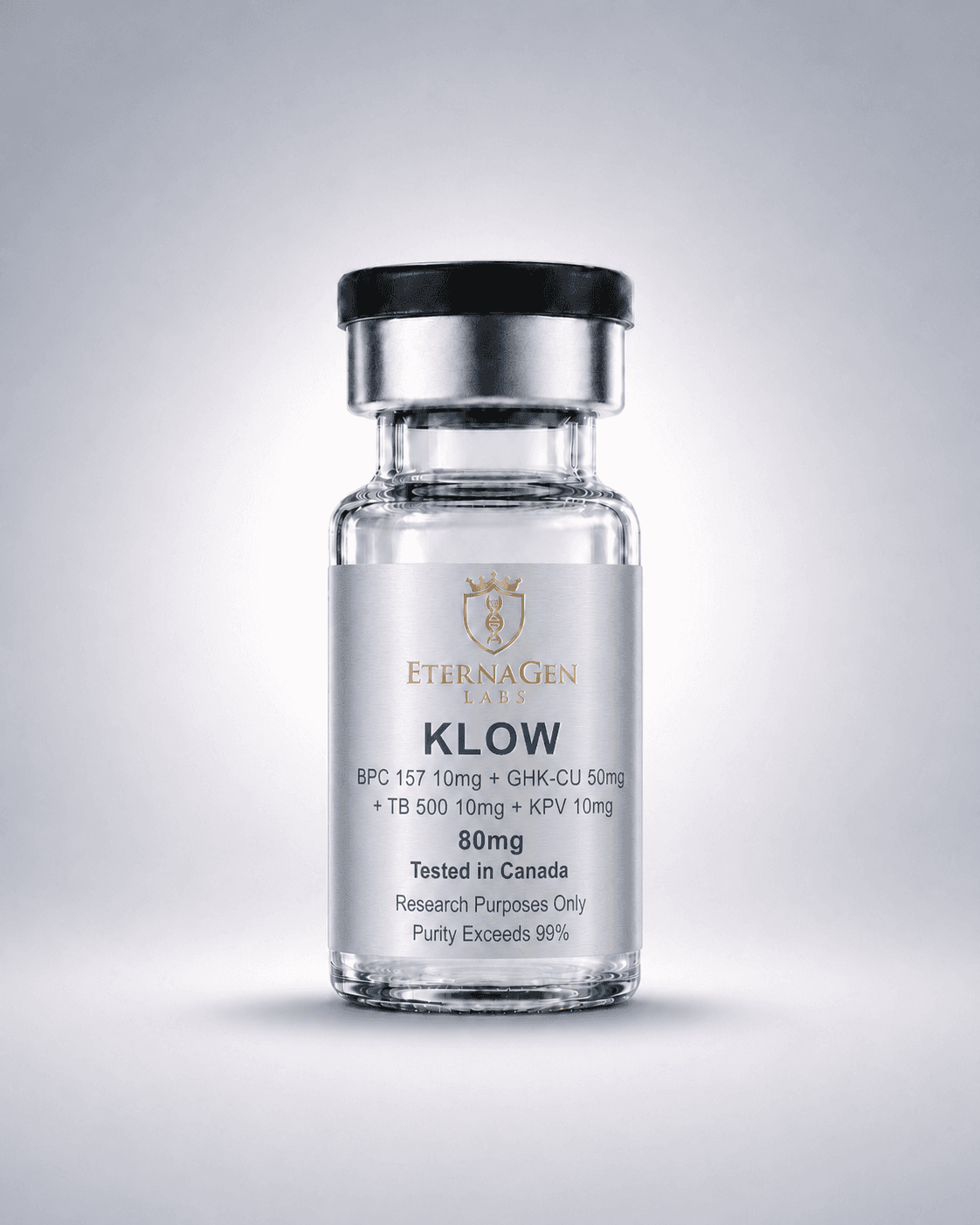
Klow contains BPC 157, GHK-Cu, TB-500 and KPV. The ingredients have been studied separately in very different settings, but the full blend’s stability, interactions and effects have not been established.
The label identifies an 80 mg fixed blend containing BPC 157 10 mg, GHK-Cu 50 mg, TB-500 10 mg and KPV 10 mg. The scientific record belongs to the individual molecular entities and study conditions—not to the blend name.The blend has not been studied as a whole. Research on one ingredient cannot predict how the complete mixture will behave.
Specifications
Supplier-origin documentation will be published only after EternaGen verifies the source and record details.
Health Canada lists the named compound or components among unauthorized injectable drugs identified in the Canadian market. A research-use label does not make an unauthorized product suitable or legal for personal use.
Explore the research
Check what was studied, what researchers observed, and the limitation attached to each finding.
BPC 157 and GHK-Cu appear in separate tendon, fibroblast and wound-related experiments.
Evidence so far: Mostly preclinical or route-specificKPV has been studied in epithelial cells and murine colitis models, not adequate human trials.
Evidence so far: Cell and animal evidenceNo controlled study was identified for the complete 10:50:10:10 mixture.
Evidence so far: Direct evidence absentProposed mechanism
The named components have been investigated across connective-tissue, matrix-remodelling and inflammatory signalling models. Those pathways overlap conceptually, but that does not demonstrate synergy, compatibility or a combined outcome.
Evidence gaps
Primary sources
Related products
Blend · Vial
A two-peptide blend used to explore how different signals influence the body’s growth-hormone system.
Blend · Pen
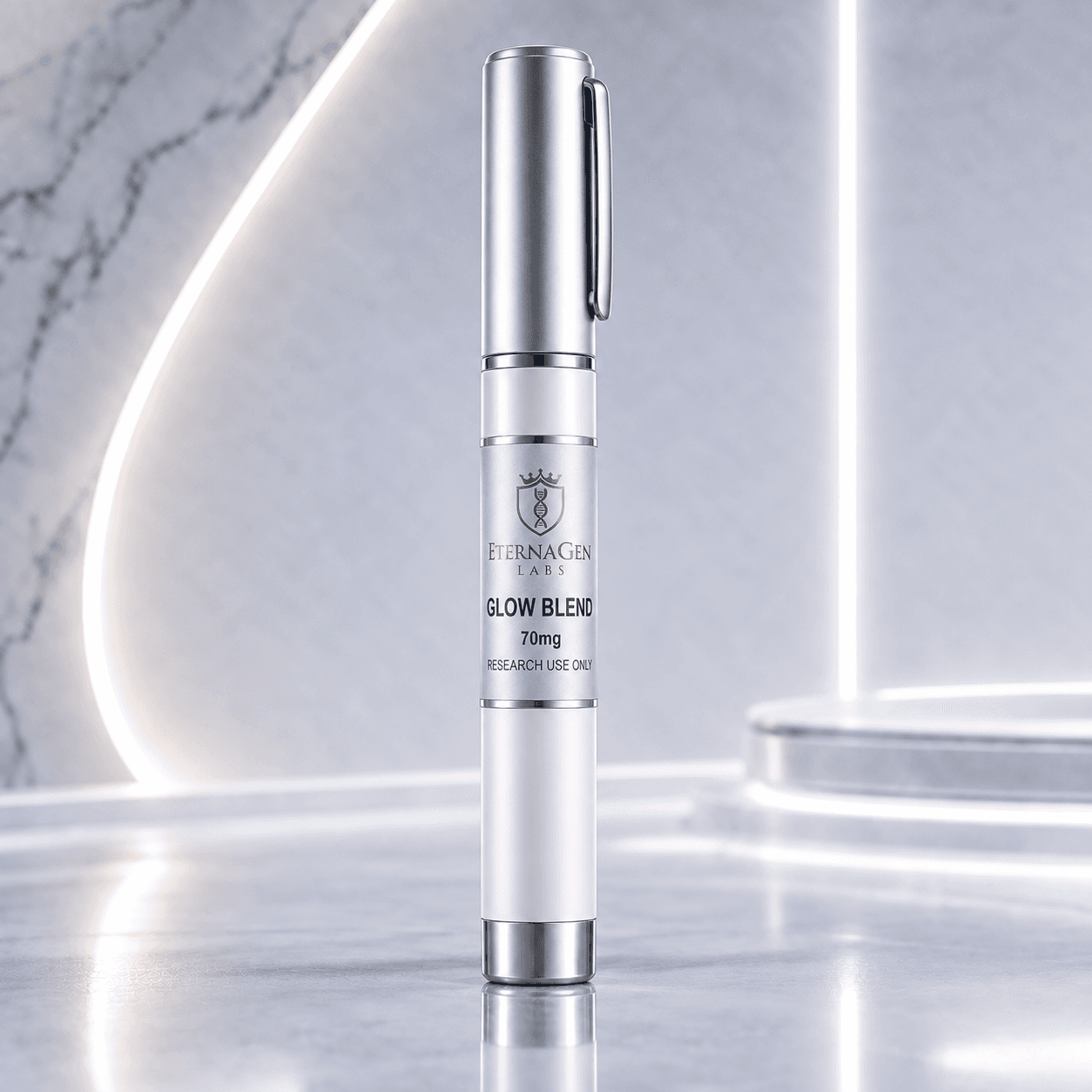
A three-peptide blend for laboratory research into tissue repair, skin biology and connective-tissue signalling.
Blend · Vial
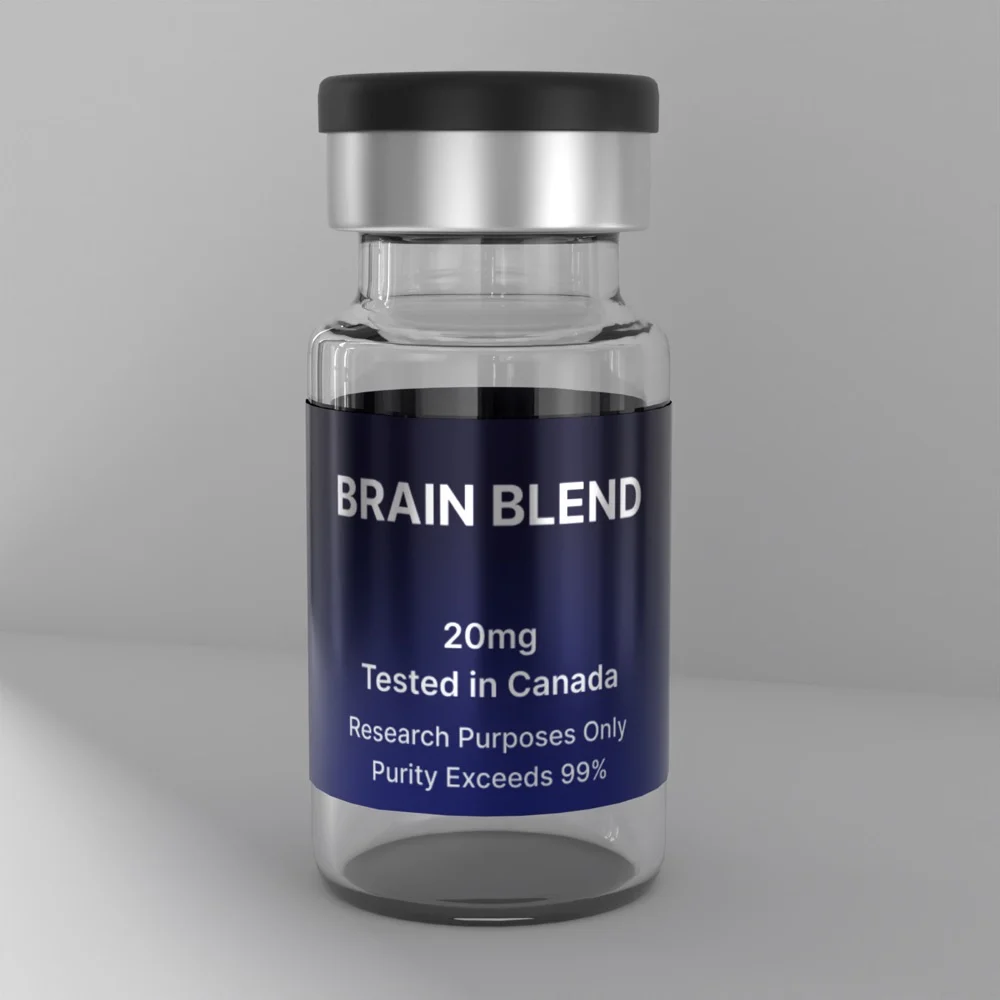
A two-peptide blend of Semax and Selank (10mg each), explored in neuroscience research.